
Introduction
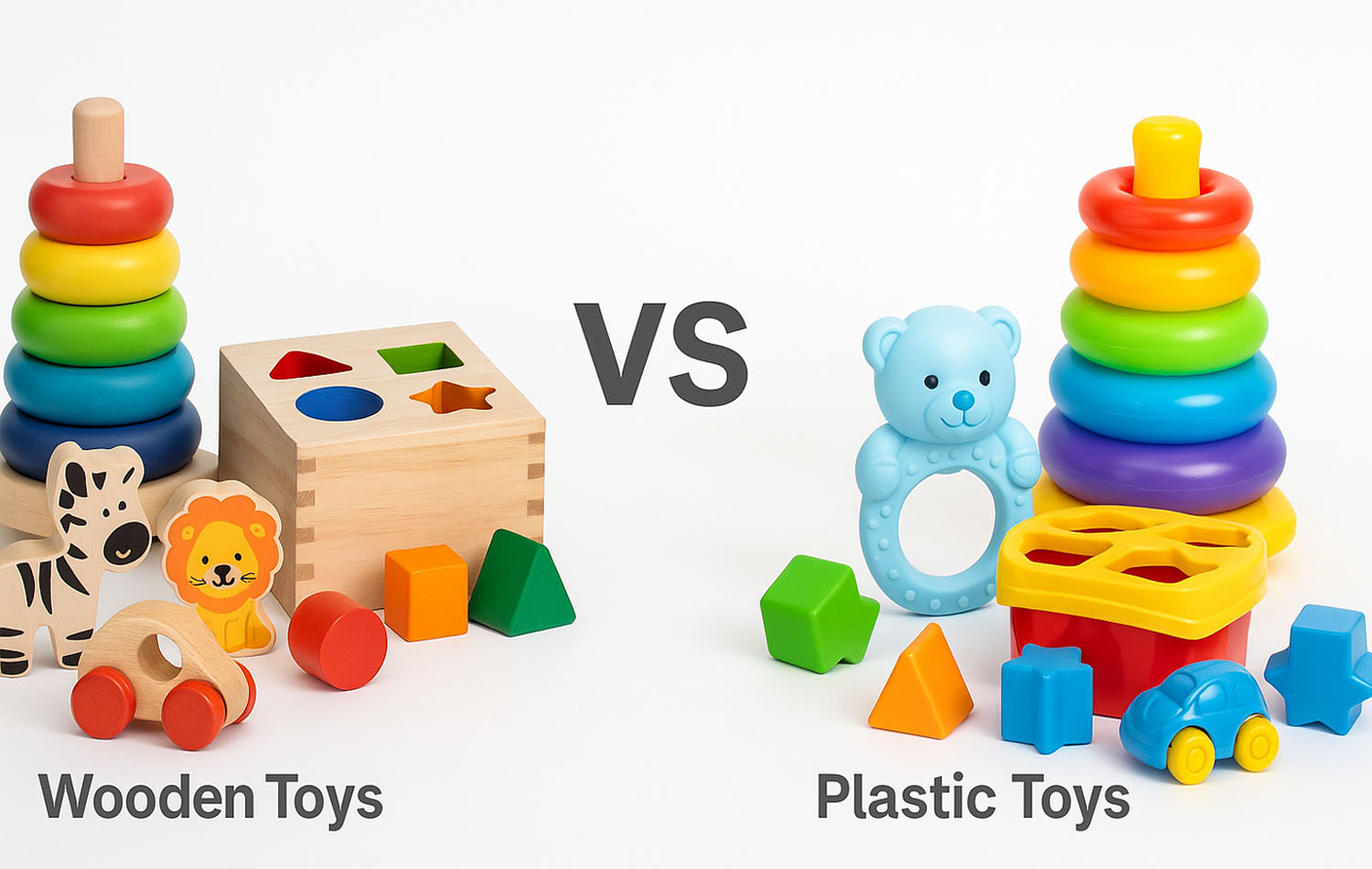
In today’s plastic world, why are wooden toys being turned to by parents? But the war between plastic and wooden toys, which we have all been taking part in for decades now, is not yet over.
Children’s media is bringing large numbers of plastic toys onto the market, and “educational” toys have all sorts of flashing lights and sounds. The charm, developmental benefits, and safety found in wood toys for children are being rediscovered by parents, teachers, and Montessori schools alike. This move away from plastic is based on both a positive attitude towards raw material production and the need to avoid pollution.
From an ecological standpoint, the popularity of wooden toys with children’s welfare in mind is here to stay for a long time to come, viewers understand. What most customers do not know is that wooden toys were already at this time well on their way to making a successful comeback as desirable products. In addition to the ecological benefits of wood, wooden toys can help to foster creativity.
Durability & Longevity
Wooden toys are created to last, be tough, and often handed down through generations as cherished heirlooms. So once you untie some tape to open a box of wooden toys, the touch of those surfaces will melt away all over your hand: it is something that can only be imagined how often such surfaces have been touched by tiny hands.
Gradually, these things are regarded as ‘antiques’ by everyone. Wooden toys are sturdy enough to take rough play, whereas plastic toys easily get broken and end up in a landfill.
Benefits for Kids
- Teaches children responsibility by taking care of their own things.
- Instils a sustainable way of life in children.
- Provides play tools children can rely on day in and day out, without the need for constant replacement.
Safety & Health Benefits
As soon as it comes to your child’s safety, non-toxic wooden toys are a great option. Wooden toys are made from natural materials, often feature eco-friendly chemical-free paints, and are therefore harmless for toddlers.
On the other hand, many plastic toys may contain BPA, PVC, and other toxic materials, which could be harmful to children’s health.
Peace of Mind for Parents: Safe playtime = healthy growth.
Sensory & Cognitive Development
Wooden toys provide a texture, weight, and feel that stimulate a child’s real-world senses – something that plastic toys can never deliver.
Skills Enhanced
- Fine motor skills through grasping and stacking
- Hand-eye coordination
- Problem-solving through puzzles and shape sorters
Plastic toys often overstimulate children with flashing lights and sounds, but lack the developmental thrust for abstract thought.
Imagination & Creativity
Wooden toys are open-ended blocks, puzzles, stacking rings allowing children to create endless possibilities. Since wooden toys are not “programmed” with a scenario to follow, as are many plastic toys, playing with them encourages free play and creativity.
Montessori wooden toys are recommended by the education system for this reason, inspired by this ecology.
Environmental Impact and Sustainability
Responsible parents of today are more sensitive than ever to environmental issues. Wooden toys, made from renewable resources and also biodegradable or recyclable, are eco-friendly toys.
Compared with wooden toys in green, it significantly contributes to sulfate discharge and waste in rubbish tips. Children of today are learning that toys supported by batteries have disposable value.
Cultural and Educational Value
Wooden educational toys often continue to legacy themselves – remember alphabet puzzles, counting frames, stacking rings? These timeless tools not only maintain traditional education values but can also:
- Teach shapes, numbers and letters.
- Help refine logical thinking and problem-solving abilities.
Cost vs. Value
Yes, there is a higher spinoff cost initially for wooden toys than plastic ones. However, the return expressed from them in terms of integrity, resilience and child development is real value for money. It may look easy for plastic toys now, but in the long run, repeated replacements make them more expensive than originally believed.
FAQs
Q1: Are wooden toys safer than plastic toys?
Yes, wooden toys are toxin-free and have zero chemicals, so children are safer to try out compared to plastic toys, which might contain damaging chemicals.
Q2: Do wooden toys really help with child development?
Absolutely! They help develop all kinds of skills: motor skills, creativity and problem solving abilities; sensory awareness.
Q3: At what age should kids start playing with wooden toys?
Even children as young as six months old can safely use non-toxic wooden toys like rattles, stacking rings, and puzzles.
Q4:Why Do Montessori Schools Use Wooden Toys?
Of his three contentions, the first, written in a single sentence, emphasizes Montessori’s basic approach to education. This theory espouses hands-on training and self-directed learning for which Montessori wooden toys are perfect for early education.
Q5: Where can you find good sites in India with a great selection of educational wooden toys?
Universal Wooden Toys not only sells in the local area, but also throughout India.
Conclusion
Wooden toys are more than just playthings – they are tools for development, creativity, and environmental protection. They are:
- Safe ✅
- Durable ✅
- Eco-friendly ✅
- Educational ✅
Investing in wooden toys for child development means choosing a future in which play is educational, imaginative, and responsible. Parents who buy them are showing faith in better values for tomorrow’s society.
Invest in toys that not only deal with amusing but also increase intelligence.
Check out our full range of Educational Wooden Toys for Toddlers at Universal Wooden Toys.